Source for honda motorcycle crankshaft for repair, manufacturing, and replacement
Find reliable for honda motorcycle crankshaft options from 30 verified suppliers. Compare specifications, prices, and certifications to select the right part for repair, manufacturing, or replacement needs.
Key considerations
Products List

$15.00 - $20.00
Moq: 100





Comprehensive Sourcing Guide
Strategic Sourcing Guide for Honda Motorcycle Crankshafts
Understanding Technical Specifications and Material Integrity
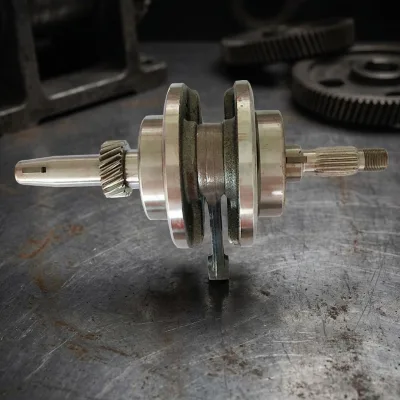
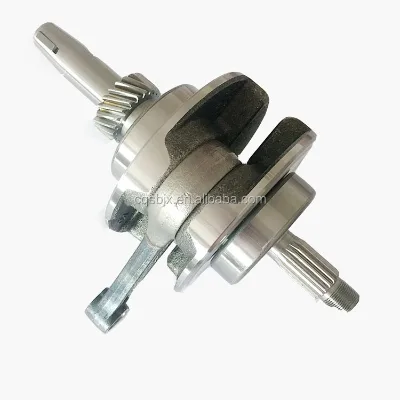
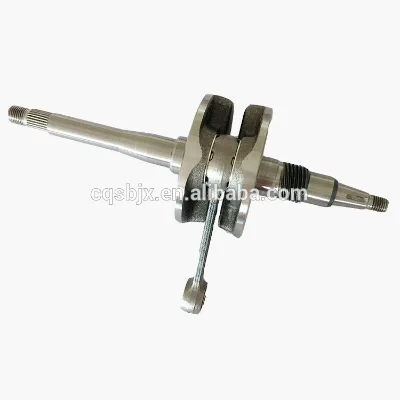
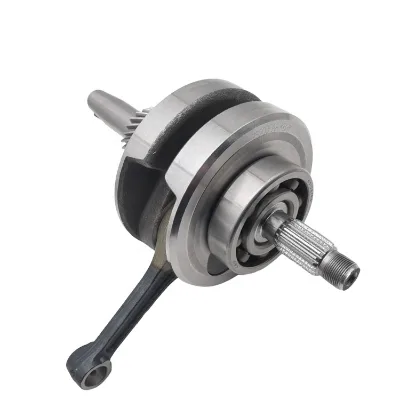
When sourcing a crankshaft for a Honda motorcycle, the primary objective is to secure a component that maintains the engine's rotational balance and power transmission efficiency. The crankshaft serves as the central axis for the piston's reciprocating motion, converting it into rotary motion. Based on available market data, the specific product attributes for these components often include models such as the Honda Lead 100, Honda CR250, and various CG series variants. Buyers must recognize that while the core keyword targets Honda motorcycles, the supply chain often lists compatible parts for a broader range of 125cc to 200cc engines, including models like the Vespa 125, POP100, and CBX200.
Material composition is a critical technical differentiator. The observed product listings indicate a prevalence of 45Cr forged steel, a high-strength alloy chosen for its durability under high-stress conditions. This material is distinct from generic iron or unalloyed metal options, offering superior fatigue resistance. The physical dimensions of the crankshaft are equally vital; for instance, specific packaging data suggests a single package size of 46x32x30 cm, which implies the substantial weight and volume of the component. The color of the finished product is typically silver, a standard finish for machined steel parts. When evaluating a potential supplier, the buyer must verify that the "Model Number" aligns precisely with the motorcycle's engine code, such as "CG200" or "cargo 125," rather than relying solely on the generic "crankshaft" designation. The "Placement on Vehicle" is consistently noted as "Lower," indicating the component's position within the engine block, which affects clearance and assembly procedures.
Compliance and Certification Verification Protocols
In the B2B procurement of automotive components, certification serves as the primary indicator of a supplier's adherence to quality management systems. The supplied data highlights a recurring certification standard: ISO9001. However, buyers must exercise caution regarding the specific version of this standard, as the market data reflects variations including ISO9001:2008, ISO9001:2015, and general ISO9001:CCC. The presence of multiple versions suggests that different suppliers or batches may adhere to different iterations of the quality standard. The "CCC" designation refers to the China Compulsory Certification, which is mandatory for certain products sold within the Chinese market but may not be the primary international standard for export.
Beyond general quality management, specific product certifications such as "ISO Engine Type:Gasoline" are observed, confirming the component's suitability for gasoline-powered engines. The HS Code 8714100090 is a critical identifier for customs classification, ensuring that the product is correctly categorized as a part of a motorcycle. Buyers should verify that the supplier's documentation explicitly states the ISO version they are operating under, as the 2015 revision includes updated risk-based thinking and continuous improvement requirements not present in the 2008 version. The "Certificate" field in product listings often lists these standards, but the buyer must request the actual certificate document to confirm validity and scope. It is also essential to note that while "OEM" (Original Equipment Manufacturer) branding is frequently listed as "Available" or "Acceptable," this does not guarantee the part is an authentic Honda factory component; rather, it indicates the supplier is capable of manufacturing to OEM specifications.
Cost Drivers and Pricing Structure Analysis
The pricing structure for motorcycle crankshafts is influenced by several variables, including material costs, manufacturing complexity, and order volume. The observed market price range for these components is between 2.5 and 20 USD. This wide variance suggests that the price is not fixed but is highly dependent on the specific model, material grade, and the quantity ordered. The lower end of the spectrum likely corresponds to standard iron-based or less complex models, while the higher end may reflect the 45Cr forged steel variants or those with tighter tolerances required for high-performance engines like the Honda CR250.
A significant cost driver is the Minimum Order Quantity (MOQ). The data indicates a typical MOQ range of 50 to 1000 units, with a specific observation of 300 sets or 300 pieces being a common threshold. Suppliers may offer tiered pricing where the unit cost decreases as the order volume exceeds the initial MOQ. For buyers requiring smaller quantities, such as 100 units, the unit price may be higher, or the supplier may require a sample fee. The "Selling Units" are listed as "Single item," which implies that pricing is often calculated per individual crankshaft rather than per set, although the MOQ is frequently defined in sets. Additionally, the "Single gross weight" is sometimes listed as 0.0 kg in digital catalogs, which is likely a data entry error; buyers must physically verify the weight to accurately calculate shipping costs, as the packaging dimensions (46x32x30 cm) suggest a substantial weight that will impact freight charges.
Typical Applications and Model Compatibility
The application of the crankshaft extends beyond a single motorcycle model, encompassing a wide array of 125cc to 200cc engines. The product listings explicitly mention compatibility with models such as the Honda Lead 100, Honda CR250, and Vespa 125. The "Purpose" is generally categorized as "for replace/repair" or "for manufacturing," indicating that these parts serve both the aftermarket repair sector and the assembly line for new vehicle production. The "Product Name" often includes specific engine codes like "cargo 125" or "CG200," which are critical for ensuring compatibility.
Buyers must be aware that while the core keyword is "for honda motorcycle," the supply chain often aggregates parts for similar engine architectures. For example, a crankshaft listed for a "CG200" may be compatible with various Chinese-manufactured motorcycles that use the same engine block design as Honda. The "Application" is broadly defined as "Motorbike," but the specific "Model Number" must be cross-referenced with the motorcycle's engine specifications. The "Condition" is consistently listed as "New," ensuring that the component is not refurbished. The "Warranty" periods vary, with some listings offering one year and others offering 24 months, which may correlate with the specific model or the supplier's confidence in their manufacturing process.
Supplier Evaluation and Operational Capabilities
Evaluating a supplier requires a deep dive into their operational capabilities, including their location, lead times, and payment terms. The "Place of Origin" is predominantly Chongqing, China, a major hub for motorcycle manufacturing. This location offers logistical advantages but requires buyers to consider the "Delivery time," which is typically 20-30 days after payment. This lead time is a critical factor in supply chain planning, especially for urgent repair needs. The "Shipping" method is primarily "by Sea," which is cost-effective for large volumes but adds to the overall transit time.
Payment terms are another vital aspect of supplier evaluation. The observed methods include T/T (Telegraphic Transfer), L/C (Letter of Credit), and Western Union. T/T is the most common for established relationships, while L/C offers more security for large transactions. The "Sample" availability is confirmed as "Yes," allowing buyers to verify quality before committing to a bulk order. The "Customization" feature is marked as "Available," suggesting that suppliers can modify the crankshaft for specific requirements, though this may impact the lead time and cost. Buyers should verify the supplier's ability to handle "OEM" requests, as this indicates they can produce parts with specific branding or tolerances. The "Quality" attribute is often stated as "100 Tested," which implies a rigorous inspection process, but buyers should request specific test reports to validate this claim.
Quality Control and Long-Term Procurement Considerations
Ensuring long-term supply chain stability requires a robust quality control strategy. The "Quality" attribute of "100 Tested" is a strong indicator, but it must be backed by documented evidence. Buyers should request test results that verify the material composition, specifically the 45Cr forged steel content, and the dimensional accuracy of the crankshaft. The "Standard" field in some listings references dimensions like "29X23X23CM," which likely refers to packaging standards rather than the part itself, but it highlights the importance of verifying all specifications.
For long-term procurement, the "Warranty" period is a key metric. A 24-month warranty offers more protection than a one-year warranty, suggesting higher confidence in the product's longevity. The "Purpose" of "for manufacturing" indicates that the supplier is capable of supporting ongoing production needs, not just one-off repairs. Buyers should also consider the "Single package size" and "Single volume" when planning storage and logistics. Although some data lists the volume as 0 cm³, the physical dimensions provided (46x32x30 cm) indicate a significant volume that must be accounted for in warehouse planning.
Finally, the "HS Code" 8714100090 is essential for international trade compliance. Buyers must ensure that their customs documentation aligns with this code to avoid delays or penalties. The "Brand Name" is often listed as "OEM," which means the part is unbranded or branded by the supplier, but it is designed to fit the original equipment specifications. By focusing on these technical, compliance, and operational factors, buyers can navigate the complex market for Honda motorcycle crankshafts and secure high-quality components that meet their specific needs.
FAQs
What certifications do for honda motorcycle crankshaft suppliers hold?
Suppliers typically hold ISO9001 certifications, including versions 2008, 2015, and CCC. Buyers must verify the specific version listed on the product page, as standards vary between batches and manufacturers in the Chongqing region.
Which material is used for the for honda motorcycle crankshaft?
The crankshaft is commonly made from 45Cr forged steel or iron. This high-strength alloy ensures durability under high-stress conditions, though some listings may specify generic metal without detailing the exact alloy composition.
Can I get samples of the for honda motorcycle crankshaft?
Yes, samples are available for verification before placing a bulk order. Buyers should confirm sample availability and costs, as the standard lead time for production is 20-30 days after payment is received.
What is the minimum order quantity for for honda motorcycle crankshaft?
The minimum order quantity typically ranges from 100 to 1000 sets, with 300 pieces being a common threshold. Pricing may vary based on whether the order meets the specific MOQ requirements set by the manufacturer.
How long is the delivery time for for honda motorcycle crankshaft?
Delivery usually takes 20-30 days after payment is confirmed. Shipping is primarily conducted by sea, which affects the total transit time from the Chongqing origin to the destination market.
Which models are compatible with the for honda motorcycle crankshaft?
Compatible models include Honda Lead 100, Honda CR250, CG200, and Vespa 125. Buyers must cross-reference the specific model number on the product page to ensure the part fits the engine block correctly.